
ColSpec® MK2 Detects Microplastics That Enter The Human Food Chain"
May 18, 2023
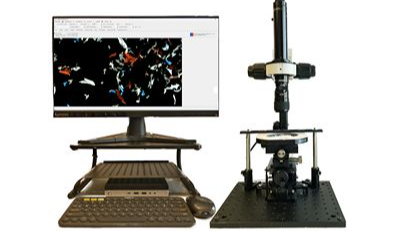
Studies show that microplastics enter the human food chain as a result of ingestion by fish. LightForm introduced a breakthrough optical instrument called ColSpec® MK2 that detects and measures the size and abundance of microplastic particles.
Asheville, United States - May 18, 2023 /PressCable/ —
Introduction: It is now common knowledge that the world’s oceans and waterways have become littered with household and industrial plastic waste. While these macroplastics may be eye-sores, they do not directly affect human health.
However, it appears that plastic particles, invisible to the naked eye, may be the prime culprits impacting the human food chain and health. Consequently, monitoring and detecting microplastics less than 1mm in size is essential to gain insight into the relationship between microplastics and human health. See https://microplasticsdetection.com
According to a detailed report in the journal Nature*, "...over 300 million microplastic particles (mostly < 1 mm) could be released annually to the oceans through marine aquaculture alone. Fishmeal is both a source of microplastics to the environment and directly exposes organisms for human consumption to these particles.”
Existing Methods For Microplastic Detection Do Not Work Well: Detecting microplastics has been challenging due to methods that lack sensitivity, deliver false positives and negatives, and require skilled laboratory personnel.
One commonly used approach involves visually inspecting samples under a microscope, while another stains plastics to observe them later under laser fluorescence. Unfortunately, both options require complicated, time-consuming sample preparation, often with hazardous chemicals.
In addition, no dedicated software is available to measure the size of microplastic particles and determine their abundance.
ColSpec A User-friendly Alternative To Existing Methods: LightForm developed ColSpec® to simultaneously detect an unlimited number of microplastics smaller than 1 mm. ColSpec is a safe, technician-friendly instrument that only takes about one-tenth of a second to characterize a sample, often with little or no sample preparation.
The ColSpec Microplastic Detection Secret: “Critical Angle Darkfield Illumination (CADFI)”: The method used by ColSpec to detect microplastics relies on illuminating a sample with an intense LED light at a near-grazing critical angle.
CADFI causes plastic particles to appear as intensely bright objects against a dark or black background, enabling easy detection. On the other hand, biomaterials and sediments are weak light scatterers that either do not appear or may show up as dim background objects.
The brightness of the microplastics increases sensitivity and, with it, the opportunity to detect even the smallest microplastic particles. The system comprises a research-grade video camera, zoom magnifying optics, a CADFI darkfield reflection illumination system, and comprehensive software.
The software operates the camera and utilizes intelligent color-spectral imaging algorithms to identify microplastics and determine their size and abundance.
ColSpec detects all types of plastics, including polyethylenes, polycarbonates, acrylics, and styrenes, whether transparent, opaque, or colored. Note: ColSpec detects but does not identify the polymer in plastics. Zooming in on questionable particles reduces false positives or negatives.
ColSpec Software Uses Color-Spectra Imaging (CSI) for Microplastics Detection: CSI is a cousin of hyperspectral imaging spectroscopy (HSI) used in remote sensing. Whereas HSI uses reflection spectroscopy, ColSpec characterizes the field of view (FOV) in “color-space” (RGB, HSV, CMYK…)
Like remote sensing procedures, the operator trains color-spectral signatures to classify and recognize known plastic types. The software assigns CSI signatures that correlate with target plastics as “classes,” which form the constituents of a color-spectral library. Future samples will use these libraries to detect microplastic targets.
The software package controls the ColSpec camera and determines the size and abundance of “recognized” microplastics.
About LightForm Inc. Founded in 1996, LightForm is a leader in custom hyperspectral microscopy and remote sensing. LightForm brings over 27 years of sensing expertise to microplastic detection.
For more information and to contact Jeremy Lerner, Chief Technical Officer, LightForm, Inc. visit https://microplasticsdetection.com.
* Nature, Scientific Reports volume 11, Article number: 2045 (2021). Microplastics in fish and fishmeal: an emerging environmental challenge?
Contact Info:
Name: Jeremy Lerner
Email: Send Email
Organization: LightForm, Inc
Address: 825c Merrimon Avenue Suite 351, Asheville, North Carolina 28804, United States
Website: https://lightforminc.com
Source: PressCable
Release ID: 89097461
If you detect any issues, problems, or errors in this press release content, kindly contact [email protected] to notify us. We will respond and rectify the situation in the next 8 hours.
More News
![aritcles[0].caption](https://static.ffx.io/images/$zoom_0.48367983666896713%2C$multiply_0.7554%2C$ratio_1.777778%2C$width_1059%2C$x_488%2C$y_322/t_crop_custom/q_86%2Cf_auto/f5cbca3c1e72610e3326c864d0c9f134d41037a2)
Taking care of grandchildren may help slow cognitive decline
Being a grandparent comes with many joys, including a lower risk of dementia.

This French-influenced Asian capital is a food lover’s dream
Hanoi is the city of flavours, threaded with influences from Vietnam’s many regions, as well as China and the colonising French – so what to eat, and where?

How to take better holiday photos with your phone
Everyone’s packing digicams again. Before you buy one, learn the tricks to taking better snaps with the gadget in your hand.

It’s 172 years old, but this iconic train station is charming and efficient
With its easy wayfinding, central location and glass-roofed design, the third-busiest station in Great Britain is one of London’s most charming.

Europe’s new entry system is shambolic – and it could see you mistakenly deported
Australians can freely stay in Europe for up to 90 days, but there is a trap in the new entry system that travellers need to know about.

2027 Ford Everest review
The four-cylinder Ford Everest diesel has lost a turbocharger, but it hasn't entirely lost its appeal.

Five stylist finalists in the 2026 Hart & Co. Kitchen Design Awards
Top up your inspiration bank with these dream kitchens as we share some of our favourite entries in this year’s awards

Leapmotor B03: Bargain EV approved for sale in Australia
Those looking to get into an EV for the least money possible could have another option in the not-too-distant future with the Leapmotor B03 receiving local certification.

2028 Mitsubishi Pajero Cross: Smaller SUV imagined
Mitsubishi is set to lean further on the heritage of its most famous SUV nameplate. We imagine what a Pajero Cross could look like.

Lamborghini focused on hybrid future, not manual transmissions
The famed Italian performance car brand admits some customers still want a manual, but says its priority is evolving its new hybrid supercar formula.

This 3100-km adventure is one of the world’s great rail journeys
Riding the rails in luxury from Zimbabwe to Angola, via the Democratic Republic of the Congo, is the trip of a lifetime.

Top five most affordable large PHEV family SUVs
If you’re looking for a new plug-in-hybrid family SUV that’s large in size but not price, there are some great options available.
YOUR NEWS, OUR NETWORK.
Do you have Great News you want to tell the world?
Be it updates about your business or your community, you can make sure that it’s heard by submitting your story to our network reaching hundreds of news sites across 6 verticals.