
Nightjar study finds wing design trades flight efficiency for agility
Lund University researchers also found that the migrating birds produce forward thrust while raising their wings, a technique mainly associated with bats and insects.
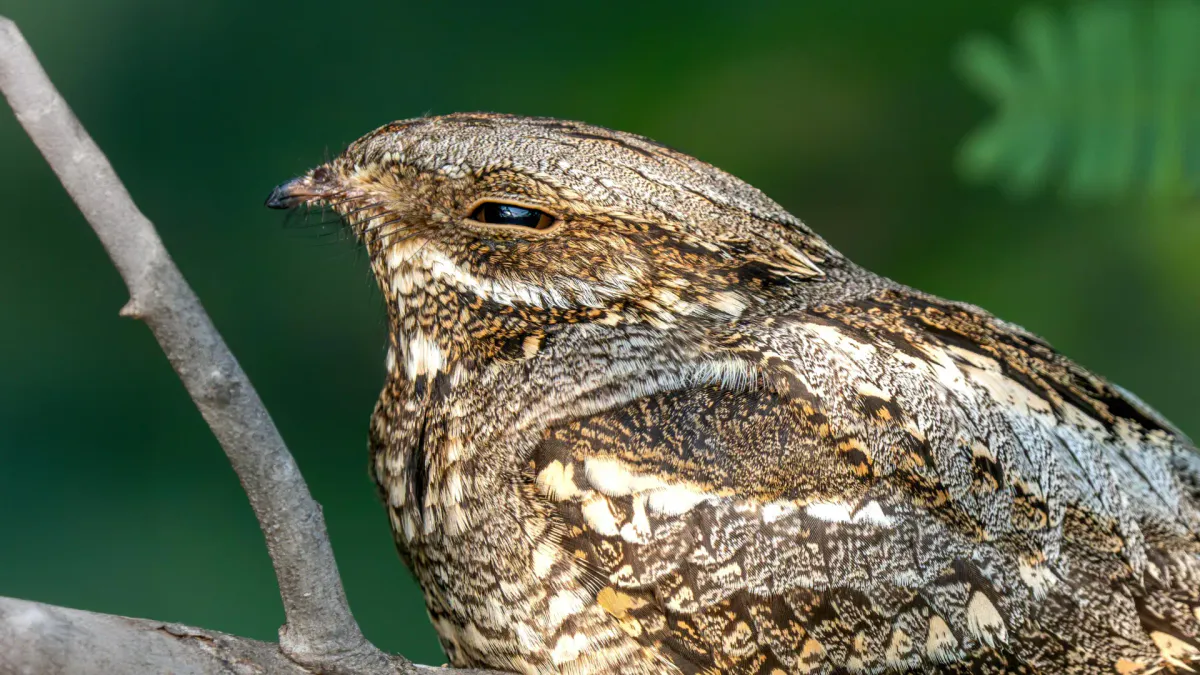
European nightjars have wings that balance the demands of migration and insect hunting rather than maximize efficiency at faster speeds, researchers at Lund University found. Their wind-tunnel experiments also showed that the birds generate thrust during the upward phase of a wingbeat.
The team recorded the birds flying at different speeds and measured airflow behind their wings. The results showed that their broad wingtips, which likely aid maneuvering at low speeds, reduce the efficiency of lift generation when flight speeds increase.
The nighttime hunters migrate annually between Europe and southern Africa, but also need to fly slowly and turn sharply to catch insects. Christoffer Johansson, an associate professor at Lund University, said the findings suggest their wings accommodate competing needs, challenging the idea that long-distance migrants are optimized for efficient flight.
The researchers also found that the birds keep producing forward thrust as their wings rise. Such an active upstroke has mainly been associated with bats and insects. Johansson said the finding suggests that animals with different evolutionary histories may arrive at similar aerodynamic solutions.
The team hopes to investigate how widely other birds and flying animals use this mechanism. The researchers said understanding it could also inform designs for flapping-wing aircraft, particularly machines whose wings have limited ability to fold.