Bacterial defense uses DNA to trigger toxin production, study finds
Gladstone Institutes researchers found that type VI retrons activate a cell-killing defense through a mechanism that differs from previously studied systems.
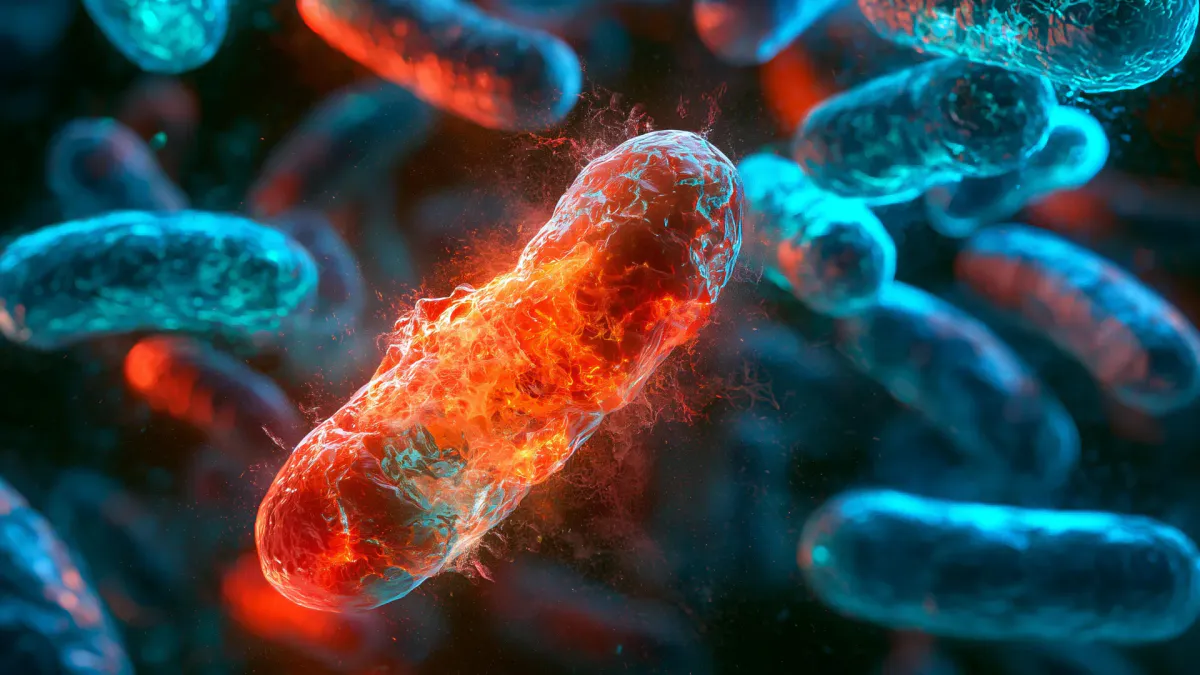
Researchers at Gladstone Institutes have identified how a bacterial defense uses DNA to initiate production of a toxin during viral infection, rather than restraining a toxin already present. The findings on type VI retrons appeared in Molecular Cell on October 13, 2026.
Retrons can prompt infected bacteria to kill themselves, preventing invading viruses, called phages, from multiplying and reaching neighboring cells. In previously studied systems, short DNA strands keep an existing toxin inactive until infection disrupts that protection.
The team found a different sequence in type VI retrons. Uninfected cells made barely detectable quantities of DNA and no noticeable toxin. After a phage entered, DNA production increased sharply. The accumulating DNA interacted with RNA that had blocked toxin production, allowing the toxic protein to be made.
According to the researchers, the toxin appears to be a very small protein that enters the bacterial membrane and destabilizes it, killing the cell. Initial experiments had missed the low DNA levels in uninfected cells. The team detected them using Spacer-seq, a method developed in senior author Seth Shipman's laboratory that uses CRISPR-Cas components to record activity within cells.
Shipman's laboratory is exploring whether the machinery could support synthetic sensors and switches for controlling gene activity. Researchers are also investigating whether the small toxins could be adapted for antimicrobial treatments. Those potential medical applications remain under development.