Study documents honey bee aggression toward competing pollinators
Researchers near Cambridge found that denser honey bee populations were associated with fewer wild pollinators and more contests for food.
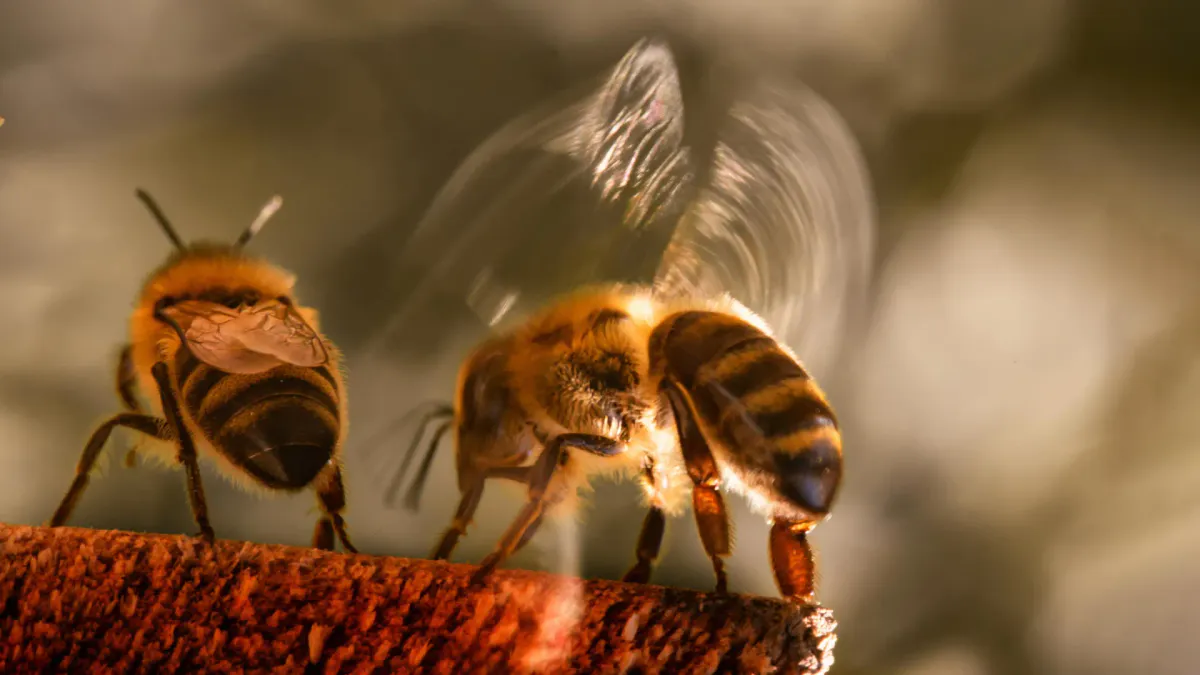
Honey bees often chased competing insects from flowers or pushed them aside during feeding encounters, according to research by Anglia Ruskin University. The findings also linked higher honey bee density with lower numbers of other pollinators.
The team tracked insects for two years across five locations around Cambridge, England, spending 93 hours observing bramble and ivy flowers. An established honey bee colony was located within 300 meters of every study site. The findings appeared in Ecological Entomology.
For bramble, twice the honey bee density corresponded to a 14% reduction in bumblebee abundance. Greater honey bee numbers on ivy were associated with fewer hoverflies and solitary bees. These observations showed associations rather than establishing that honey bees caused the declines.
Avoidance of honey bees by other pollinators accounted for 28% of recorded bramble encounters and 36% of ivy encounters. Among contests that honey bees won, chasing or physical displacement occurred in at least 20% on each plant.
The ivy bee was the sole pollinator seen initiating challenges against honey bees. It sometimes retained feeding space by driving honey bees away.
Competition was more frequent under warmer conditions, prompting researchers to warn that warming could increase pressure on wild pollinators. Lead author Victoria Buckle, a PhD student at Anglia Ruskin University, said the research sought to help conserve wild pollinators and support coexistence with managed bees, not deter beekeeping.