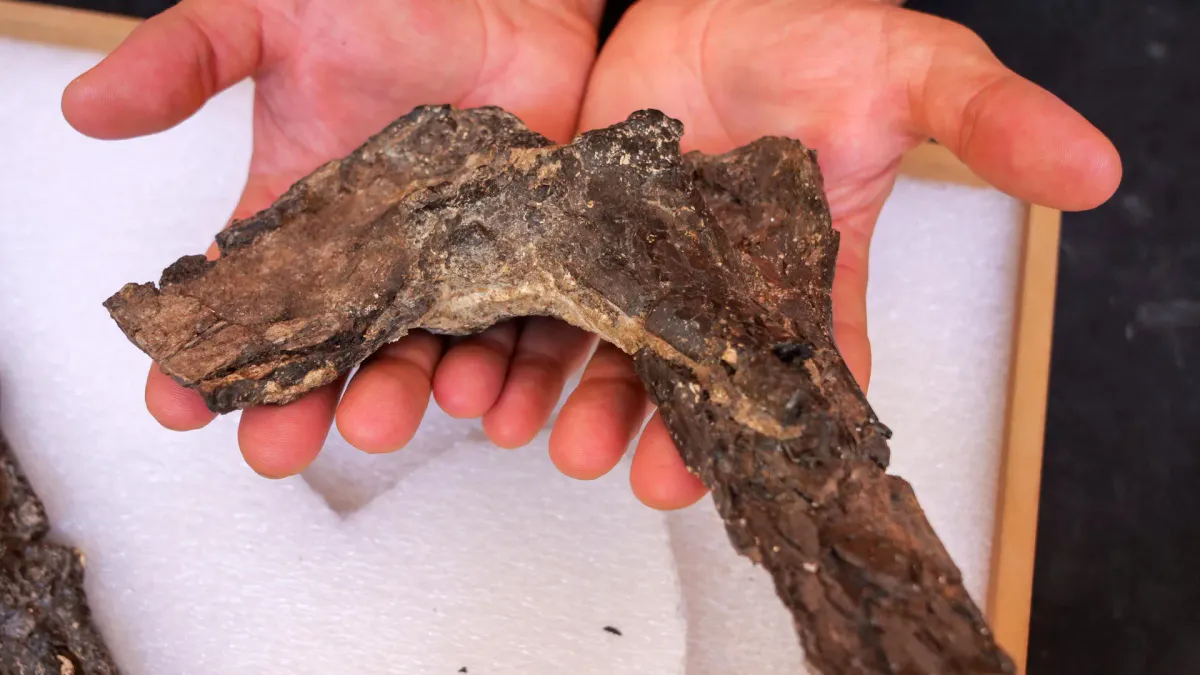
Fossils from China point to an amphibian that lived entirely at sea
Two skeletons dating back nearly 237 million years offer evidence of a marine lifestyle unknown among living amphibians, researchers say.
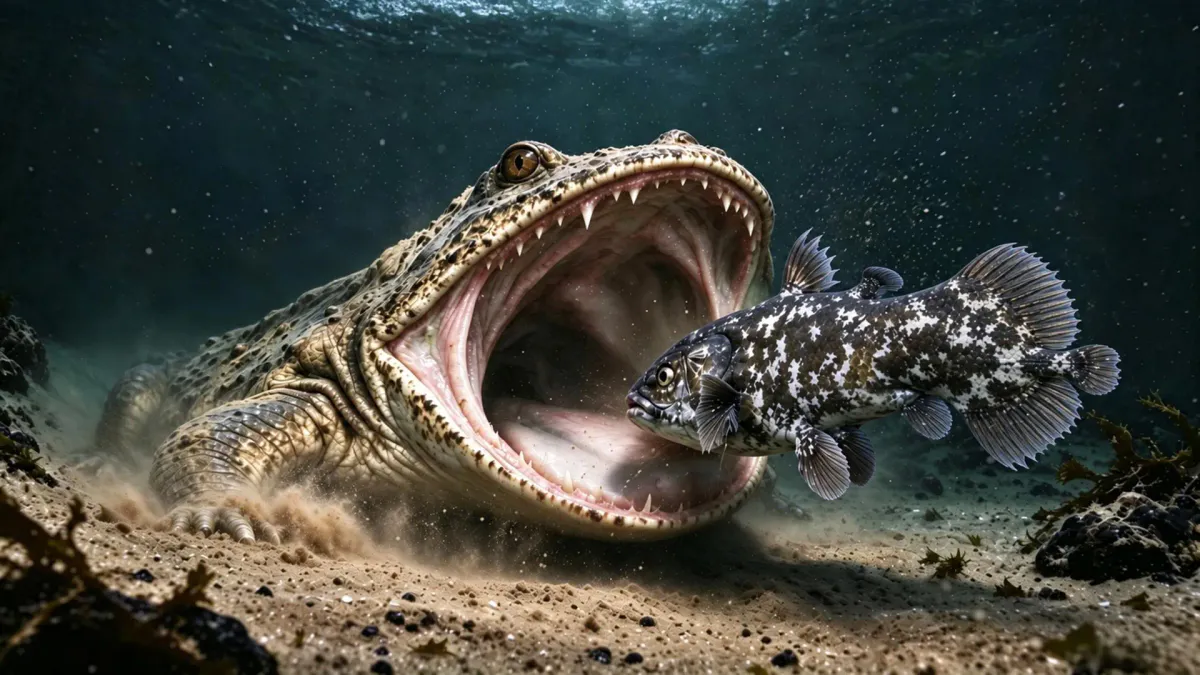
An armored amphibian discovered in China's Guizhou Province appears to have spent its entire life in the ocean, according to researchers examining two fossils. Named Gerrothorax maritimus, the animal lived nearly 237 million years ago during the Late Triassic.
The study, published in Nature Ecology & Evolution, involved scientists from the University of California, Davis, Peking University, and the Geological Museum of Guizhou. Their conclusion draws on the skeletons' preservation, the surrounding sediments and chemical tests.
The fossils came from deposits formed in deep seawater, in an area once hundreds of miles from major landmasses. Delicate parts, including fingers, remained intact, suggesting the bodies had not traveled far after death. Strontium isotope measurements also closely matched those expected for Late Triassic seawater.
Nearly three feet long, the amphibian had a wide, flattened body covered with thick bony armor. Its skull and heavy covering suggest it waited on the seabed to capture prey rather than pursuing it, the researchers said. The armor may also have offered protection against predators such as ichthyosaurs.
How it tolerated seawater remains uncertain. The team proposes that its armor limited water movement through the skin, potentially allowing it to absorb swallowed water through its digestive tract instead. Gills may have removed excess salt, although their presence is known from other members of the Gerrothorax genus rather than established here for this species.
Of the more than 8,000 amphibian species alive today, none is known to live exclusively in marine conditions, and fewer than 2% tolerate salt. Their permeable skin generally leaves them dependent on freshwater or nearby habitats.