Heme molecules detected in dinosaur bones dating back 115 million years
Researchers identified chemical evidence of blood components within mineralized cells in the remains of a meat-eating dinosaur from Brazil.
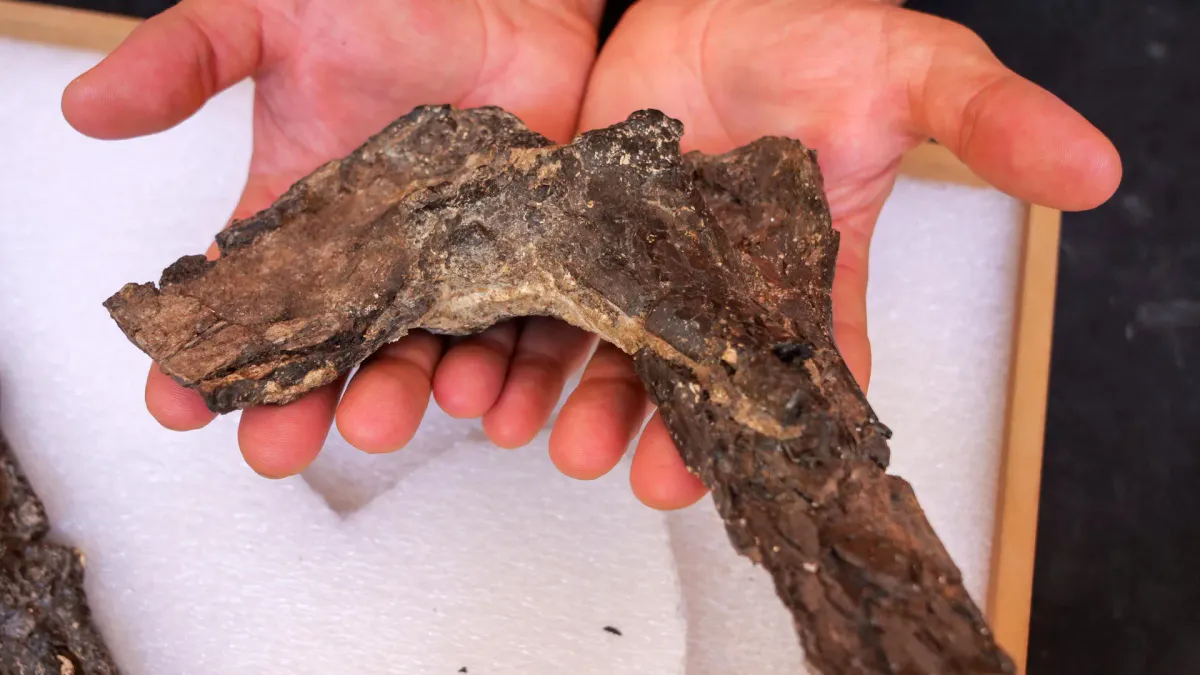
An international research group led by Curtin University has detected preserved heme molecules in mineralized red blood cells from dinosaur bones that are 115 million years old. The researchers reported that the molecules provided chemical evidence of ancient blood.
The specimen belongs to Aratasaurus museunacionali, a carnivorous theropod discovered in northeastern Brazil. Analysis of its limb bones revealed the cells within small channels that once held blood vessels. Heme is a component of hemoglobin, the protein responsible for carrying oxygen in red blood cells.
Published in the Proceedings of the National Academy of Sciences, the study also identified amino acids linked to collagen, a structural protein. The researchers described their work as the first definitive chemical evidence of hemoglobin-related molecules inside fossilized dinosaur red blood cells, rather than identification of cell-like shapes alone.
The team linked the preservation to hausmannite, a mineral that helped stabilize both the cells and their molecular contents. They also suspect that rapid burial beneath sediment, scarce oxygen and substantial microbial activity may have contributed to the material's survival.
Research leader Kliti Grice, founding director of Curtin University's WA-Organic and Isotope Geochemistry Centre, said the findings could help scientists investigate the metabolism and physiology of extinct animals. A 2021 Australian Research Council Laureate Fellowship awarded to Grice supported the work.