Newly identified viruses offer clues to evolution of cellular compartments
A University of Miami study used genetic databases and AI tools to investigate a possible evolutionary connection between viruses and encapsulins.
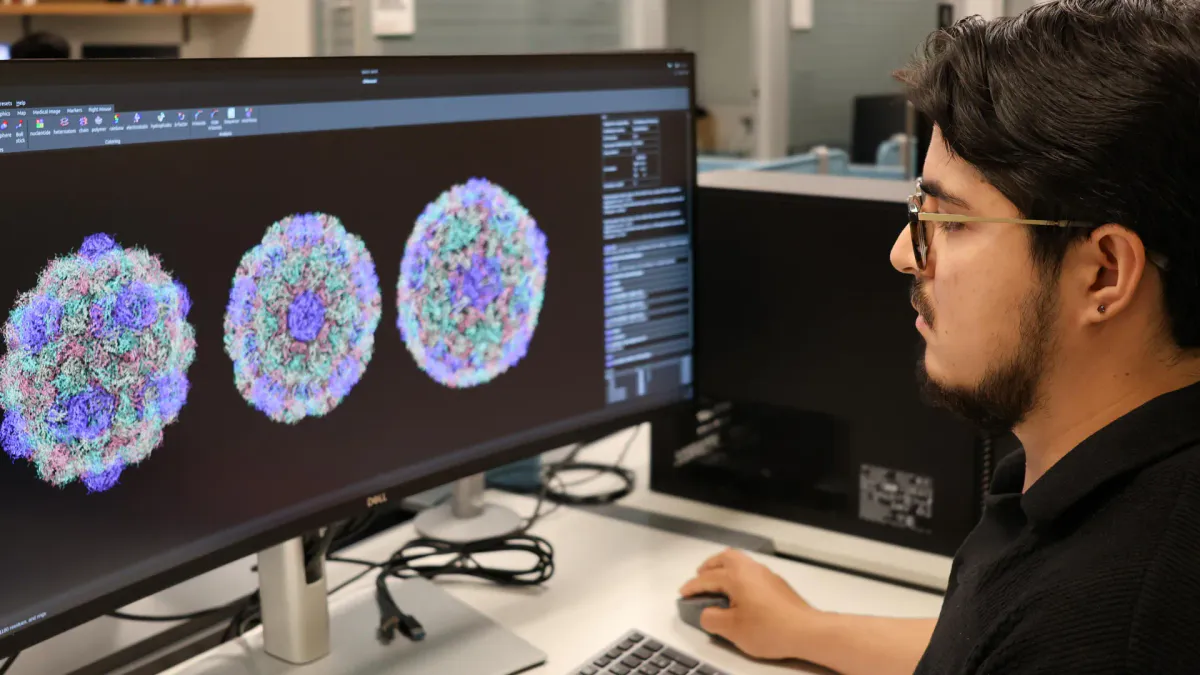
University of Miami researchers have identified a previously unknown group of viruses that may help explain how tiny protein compartments within cells evolved. Their study, published in Nature Communications, suggests that viruses and compartments called encapsulins may have given rise to each other repeatedly over millions of years.
The findings challenge the earlier view that encapsulins originated from viruses. According to the researchers, the newly identified viruses have traits of both groups, making them possible intermediates in their evolution. Their genomes are also smaller and simpler than those of other viruses with shells built from HK97-fold proteins.
HK97-fold describes a three-dimensional protein structure found in both viruses and encapsulins. These proteins form shells that can protect viral genetic material or enclose biochemical reactions inside cells.
First author Abelardo Aguilar and senior author Antoni Luque Santolaria worked with collaborators to search databases holding billions of DNA sequences rather than grow viruses in a laboratory. They combined bioinformatics and protein-behavior models with AI tools, including AlphaFold and protein language models.
The team also proposed that immature viral shells, known as procapsids, could provide an evolutionary pathway between viruses and encapsulins. Such shells might both contain genetic material and support chemical reactions, the researchers suggested. Further research is needed to establish those possible functions.