Study suggests DNA building block may have helped early life withstand UV
Texas A&M researchers found that thymine appears to favor UV damage that is easier to reverse, offering a possible explanation for its role in DNA.
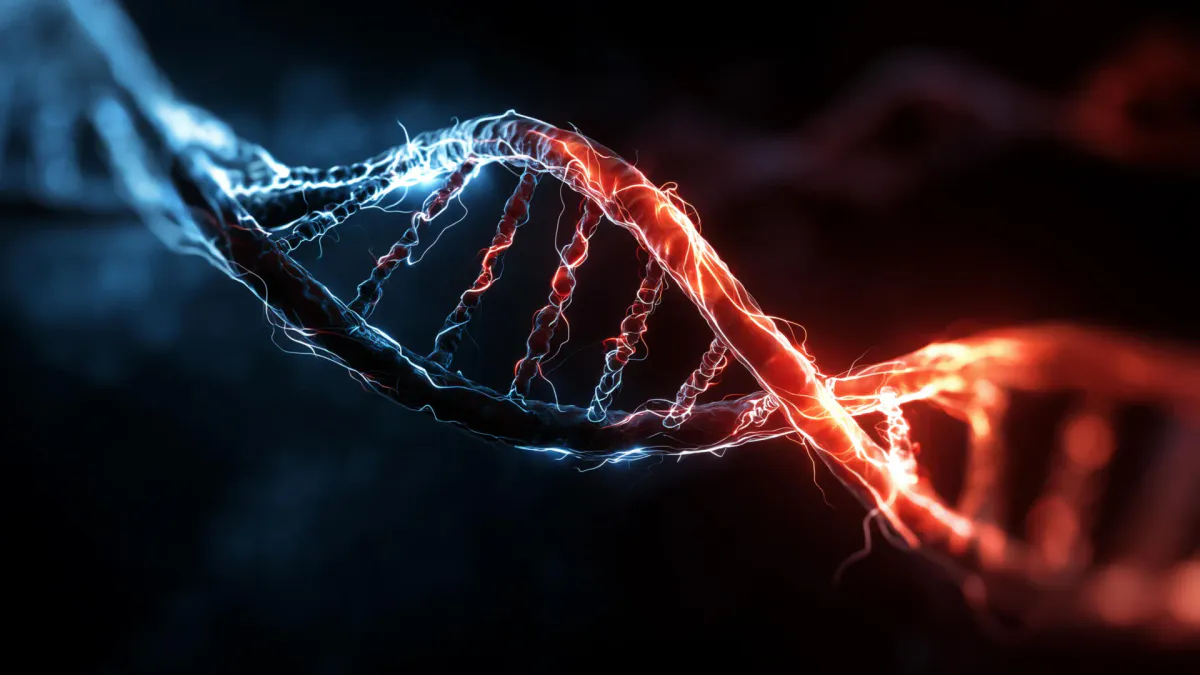
A Texas A&M University study suggests that thymine, a chemical component of DNA, may have helped early genetic material survive intense sunlight by making ultraviolet damage easier to reverse rather than preventing it.
The findings, published in the Proceedings of the National Academy of Sciences (PNAS), address a puzzle about genetic evolution: DNA uses thymine instead of uracil, the corresponding component in RNA, even though thymine is more vulnerable to certain kinds of UV damage.
Researchers exposed both compounds to controlled UV radiation designed to mimic conditions on early Earth. They examined their responses using several light-based techniques, including absorption, fluorescence and Raman spectroscopy. Dr. Peter Rentzepis, a professor in the Department of Electrical and Computer Engineering, led the work with research assistants Keyvan Khosh Abady and Negar Karpourazar.
The team found that thymine appears to channel damage toward forms that can be reversed more readily. Khosh Abady said this could have helped early genetic molecules recover from radiation exposure while confining damage to their bases and protecting more vulnerable molecular structures.
The researchers also produced reference measurements of the compounds’ responses to light. Khosh Abady said these could eventually support faster pathogen detection and checks on whether UV treatment has inactivated microorganisms, particularly in water-treatment systems.
The team next plans to investigate how early genetic components formed and assembled, including whether meteorites delivered some of their ingredients to Earth.